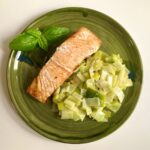
 This melt-in-the-mouth leek dish is a favorite in France in the cooler months, although I’ve never seen it served anywhere else. And the beauty of the dish is that it is not only supremely comforting but also extremely quick and easy to make. The leeks are tenderly sautéd in butter, then cream is added, et voilà. The dish is most commonly served alongside fish, but also marries well with sea scallops, roast chicken or roasted veggies.
Fondue de poireaux / Leek fondue
But why is it called a fondue? That word is generally associated with cheese, as in fondue savoyarde (cheese fondue). The reason is simple. The term derives from the word fondre (to melt) — and in cheese fondue, originally a Swiss dish, the cheese is melted.
Then beef fondue (fondue bouguignonne) came along, introduced by an enterprising Swiss chef in New York. This is a bit of an aberration because nothing is melted in that dish, but since bits of beef are dipped into hot oil in a communal pot, mimicking the bread dipped in melted cheese in the original fondue, the term has stuck. The same chef then introduced fondue au chocolat, in which fresh fruit is dipped into melted chocolate.
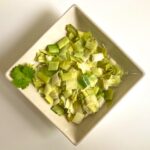 And what about fondue of leeks? I believe the term is attached to the venerable veggie because the chopped leeks are ‘melted’ to tenderness in butter, and the addition of cream makes the dish all the more meltingly delicious (fondant). Along the same lines, one of the most popular desserts in Paris is called fondant au chocolat. It’s a rich chocolate cake that is removed from the oven before the center has set, leaving the heart fondant (melted).
My mind has been very much occupied with chocolate cake recently due to the fact that a close friend, Nicole, celebrated her 80th birthday this past Sunday. I’ve traditionally made her birthday cakes over the years, but when she told me she’d invited 50 people I balked. She then got out the big guns, saying she absolutely had to have ‘le gâteau de Meg,’ so I agreed. A few days later, her daughter informed me that the guest list had risen to 60. Then Nicole informed me that she’d invited … an 11-member family klezmer orchestra! We were up to 71. And then she invited more people. I needed to make cake for 80.
What to do, what to do? I figured I could make a three-tiered cake for about half the guests, with a large sheet cake for the others. The problem was that when my stove broke down some years back and a new one was delivered, the workmen took away the old stove — and I forgot to remove my sheet pans, which were in its drawer. About an hour after they left, I phoned them in a panic asking whether I could get my cake pans back. ‘Mais non, madame! Your stove is already being taken apart at the recycling center’ they replied.
 To make a long story short, I went out and bought a new sheet pan at Dehillerin, the best cookware store in Paris (and maybe the world). This shop has stood the test of time, having recently celebrated its 200th anniversary, and indeed it’s where I bought my original sheet pans 50 years ago. So then I came home and made the cakes — which turned out fine. And it was a great party! (For the cake recipe, click here.)
 Happy cooking.
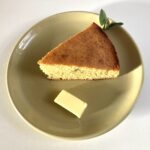 Fresh sage adds an element of surprise and delight to this American classic, cornbread, which can be made on this side of the Atlantic by substituting polenta for cornmeal. And although cornbread is traditionally served mainly on Thanksgiving in the northern United States, it makes a great addition to any meal where roast chicken, duck or game is on the table. So you can wait for the holiday, or you can fire up the oven and try it right now.
 In my case, this involved the 1943 Normal Rockwell painting called
 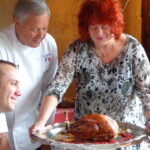 What to do, what to do? I called Nancy, who explained to me about using polenta instead of cornmeal. I got up the next morning at 6 a.m. and set to work. My first attempt was an abject failure, but I tried again and produced a reasonable semblance of cornbread. Then I raced to the train station with cranberry sauce and cornmeal in tow. On arrival, I found that Georges Blanc’s version of Thanksgiving turkey was minuscule but delicious.
 Happy cooking.
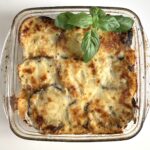 In the midst of this summer’s Paris heatwaves I decided to go Greek — the latest iteration of which, now that it’s a bit cooler, is moussaka. With its richly spiced meat sauce nestled between layers of tender eggplant, and its creamy topping, this is comfort food at its finest. Moussaka can be a one-dish meal or the star of a Greek dinner, preceded perhaps by
 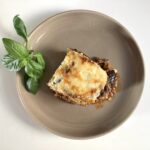 But getting back to moussaka, today’s recipe makes about six portions, depending on the appetites of those at your table. If there will be fewer people, not to worry. You can cut the baked moussaka into individual portions and freeze them. Allow to defrost before reheating, and voilà — you’re back in Greece.
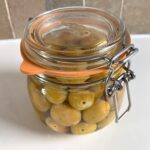 Almost every year towards the end of summer I find myself piling plums into jars, covering them with eau de vie (clear brandy), adding some sugar and sealing them up to be ready in time for the holidays. The jars need to rest for at least two months. When you open them, the flavor of the fruit has infused the alcohol, creating a heady, heavenly concoction that may be served after dinner in pretty little glasses, as you’d serve a digestif, for example Cognac.
 This year I used two types of plums — small, sweet yellow mirabelle plums, which are grown across France, particularly in Alsace-Lorraine in the northeast, and small blue plums, known here as quetsches, which are a bit more tart. In the past I have also used greengage plums (Reine-Claude), but they tend to be larger, which is a consideration as you want to be able to fit a plum or two into each little glass.
 When I still had my farmhouse in Burgundy, I had many hilarious evenings with friends when dinner ended with cherries or plums à l’eau de vie. It was all the more fun because our garden had fruit trees, so I was able to pick the cherries and plums myself before having my way with them in the kitchen. You can use jars of any size for this recipe — a couple of large ones to keep at home, and smaller ones to give away. They make great Christmas presents.
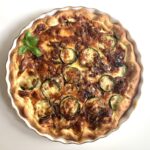 Sometimes a new recipe just pops into my head. This happened the other day with this zucchini-red onion tart. Often it’s a visual thing. I open the fridge, spot an ingredient or two and think, Oh! That could be good. As you may know, it’s been incredibly hot in Paris this summer — too hot to spend much time in the kitchen. So I had a store-bought pie shell in the fridge, plus eggs, cream, milk and cheese, and fresh thyme growing outside my veranda.
 When I go into the kitchen at lunchtime, I don’t always know what I’m going to make. The other day it turned out to be egg salad with radish and onion, a dish I picked up long ago while posted in the former USSR. I had the ingredients on hand (including fresh herbs), it was broiling hot in Paris and I didn’t want to spend a long time cooking. As I’d boiled a couple of eggs the day before, the salad was ready in less than 10 minutes.
 Regular readers of this blog may have noticed that this is my first post in a while. The reason is that I’ve been busy on other fronts, notably helping to produce a special 50th anniversary issue of
  When spring comes to Paris, I tend to feel like spending less time in the kitchen – which is a good reason to make roast chicken thighs with thyme. It’s a supremely French dish and supremely easy. The chicken is coated with olive oil and sprinkled with thyme leaves. While it’s roasting, you can make the side dishes of your choice – or go read a book or look out the window at the budding leaves. Within a short while, your dinner will be ready.
 In the meantime, I’ve been enjoying the annual rites of spring, repotting the strawberries on my balcony and going down to the quais along the Seine to buy a new cherry tomato plant. There are pansies, nasturtiums and campanula in bloom along the veranda rail and narcissus inside, and a I set a pot of muscari (grape hyacinth) in the bathroom. It’s all very lovely.
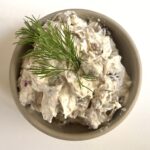 I first tasted this earthy wild mushroom spread at the home of my friend Vera, who lives across the street from me in Paris but is originally from Czech Republic. She served it on toast during cocktail hour and it knocked me out of my socks. The mushrooms – porcini, or cèpes in French – had been gathered by her nephew in a Czech forest and dried before being turned over to Vera. She brought them home, worked her magic and a recipe was born.
 I learned to make this wild mushroom spread about a year ago when Vera, upon returning from a visit to Czech Republic, kindly gave me a bag of dried porcini gathered by her nephew (at right, with a couple of prize specimens). When I asked her what to do with them, she gave me the recipe, which I immediately tried. Judging by the response, it was a success.
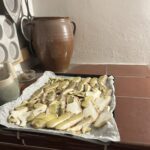 The mushrooms Vera brings back hail from a forest outside the hamlet of Resek in the Krkonoše Mountains on the border between Czech Republic and Poland. The nephew’s family has a shed with drying racks ready to receive the mushrooms, which are first sliced (as shown at left). There’s a lot of competition for these mushrooms, which only sprout when the weather is right. Drying allows the family to enjoy them year round.
 Fend off the last (hopefully) of this winter’s chill with a bowl of elegant, creamy vegetable soup, which is not just comforting and supremely French but remarkably easy to make. All you need is a leek, a potato, a carrot, dried tarragon and some heavy cream, as well as salt and freshly ground black pepper (de rigueur). Add some fresh herbs for garnish — chervil, as shown in the photo, or dill, cilantro, whatever — et voilà. Soup’s on.
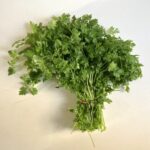 You can vary the flavor and look of the soup through your choice of fresh herbs for garnish. I love feathery chervil (cerfeuil), and happened to have some on hand, so that’s what I used (at right). But chervil is far harder to find than dill, which would otherwise be my top choice, or cilantro, basil or tarragon. Chives are another possibility. Or use your imagination.
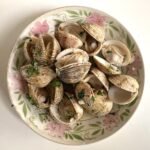 Clams cooked in white wine with garlic, shallots, olive oil and butter — and sprinkled with parsley and black pepper — make an elegant but simple dish that’s served in winter and spring in France. This is because clams are harvested over here from autumn to late spring. Elsewhere, it’s a different story, as you may know if you’ve ever been on a summer clambake. In New England, people may go clamming all year round.
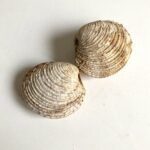 In France, clams come in many varieties, and even the nomenclature is confusing. Palourdes, for example, is a vernacular word that covers several clam types. Praires, which I used in this recipe, are also known as palourdes sauvages (wild clams). Shown at right, they tend to be about 1-1/2 inch (4 cm) wide. Then there are coques, aka cockles, which are like mini-clams and are often used over here for pasta alle vongole. And finally there are what the French also call clams — a bigger, far less delicate variety.


